
Short Answer
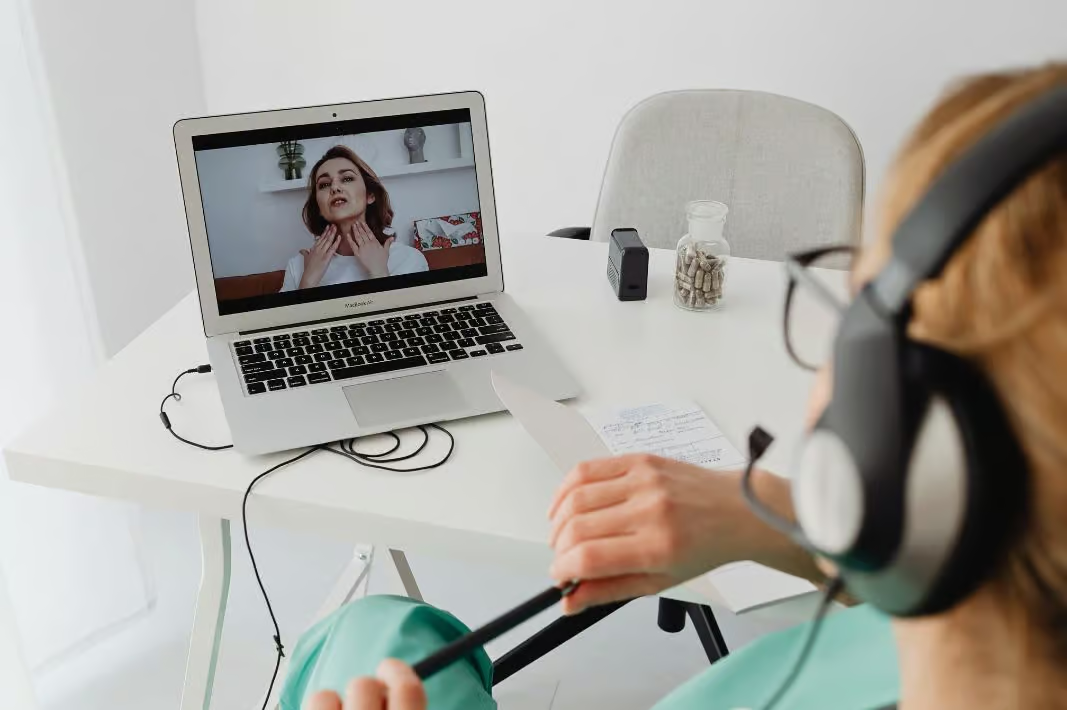
While you’re at your hotel in Mexico, telemedicine lets you video chat with a real doctor who is qualified in Mexico. They will discuss what’s wrong, say what you have, and then electronically send a prescription to a pharmacy nearby. The pharmacy will get the medicine to you. Generally, the entire thing, from scheduling the appointment to actually having your medication, is done in one or two hours. This service is available all over Mexico, handles most of the health problems tourists get, and is a lot cheaper than going to a doctor at your resort or the emergency room.
Why Your US Telehealth App Won’t Work Here
Most American tourists assume they can fire up Teladoc or MDLive if they get sick in Mexico. It seems logical. You’re paying for the service, the app opens just fine on your phone, and you can technically connect with a doctor. The problem is what happens after that call.
US telehealth providers use physicians licensed in the United States. Those doctors can talk you through symptoms and offer general advice, but they can’t write a prescription that a Mexican pharmacy will fill. Their licenses aren’t valid here. So you end up with a consultation that tells you what you probably already suspected (you have a UTI, or traveler’s diarrhea, or a sinus infection) but can’t actually get you the medication you need to fix it.
A surprising number of travelers discover this gap mid-illness. They’re feverish, uncomfortable, scrolling through their app, and the doctor on the other end is saying “I recommend you find a local provider.” That’s not helpful when you’re in a hotel room in Tulum at 11 p.m. and you don’t speak Spanish.
The fix is simple: you need a doctor with a Mexican medical license. Telemedicine services staffed by Mexican-licensed physicians can diagnose you, prescribe medications that local pharmacies will actually dispense, and arrange delivery to wherever you’re staying. Same convenience as your US app, but with a prescription that actually works on this side of the border.
How Telemedicine Actually Works in Mexico

Getting medical help remotely in Mexico is surprisingly simple. Here’s how a standard appointment will go, from beginning to end.
You get in touch with a doctor. Most services let you book through WhatsApp, by phone, or using a form on the internet. You’ll usually hear from someone within twenty minutes. The appointment itself is a video call, allowing the doctor to see you, to check out a rash for example, or to get a sense of how you are.
The doctor will properly assess you. Telemedicine in Mexico is often much more detailed than what people from the US are used to. The doctor will ask a lot of specific questions about your past health, when your symptoms began, your diet, if you’ve been in the sun or the sea. They aren’t hurrying through a quick five-minute list to get a prescription number.
You’ll then get a proper diagnosis and a plan for your treatment. Should you need medication, the doctor will write you a prescription that is legal to use at any pharmacy in Mexico. You’ll be told what the medicine is for, how to use it, what to be aware of for side effects, and when you should see a doctor again if you aren’t improving.
The medicine will be brought to you. The doctor or the company will get a local pharmacy to deliver your prescription. In places tourists go to like Cancun, Playa del Carmen, and Tulum, this delivery generally takes between sixty and ninety minutes. You can just remain in your bed. And that’s all there is to it.
It’s good to be aware that a telemedicine appointment with a doctor who is licensed in Mexico is a lot cheaper than a doctor at your hotel ($100 to $300 USD) or a trip to the emergency room ($200 to $1,500+ USD depending on the hospital). And in contrast to those options, you don’t have to get up and dressed, arrange transport, or deal with a medical form in Spanish when you’re already feeling so bad.
For tourists researching Cancún as a destination for planned medical procedures rather than acute care, medical vacations in Cancún covers how the local healthcare infrastructure works for elective visits.
What Telemedicine Can (and Can’t) Treat
Telemedicine handles the conditions that ruin the most vacations in Mexico. These are problems a doctor can diagnose through conversation, visual assessment, and your description of symptoms.
Works well for:
- Traveler’s diarrhea and food poisoning (the single most common reason tourists need medical help here)
- UTIs, which hit harder and faster in Cancun’s heat when you’re dehydrated from sun, alcohol, and not enough water
- Sinus infections and upper respiratory issues, often triggered by aggressive hotel air conditioning
- Ear infections, especially after swimming or snorkeling
- Mild to moderate skin rashes (the doctor can see them on camera)
- Sore throats and cold symptoms
- Medication refills or replacements for prescriptions lost during travel
- Allergic reactions that aren’t causing breathing difficulty
Needs an in-person exam instead:
- High fever above 101°F (38.3°C) with no obvious cause
- Chest congestion that sounds like it might be in the lungs
- Severe dehydration where IV fluids might be necessary
- Injuries that need hands-on assessment
- Any situation where a child is involved and you want the reassurance of a physical examination
For conditions that need hands-on assessment, a house call doctor in Cancun and the Riviera Maya is the next step up. The doctor comes to your hotel room with diagnostic equipment for a bedside examination.
For a full comparison of pharmacy clinics, resort doctors, and emergency rooms, see our side-by-side guide to walk-in medical options in Mexico.
When You Need More Than a Video Call

The simplest way to think about it: start remote, escalate if you need to.
Telemedicine is the right first step for most situations because the doctor can tell you whether your symptoms need in-person attention. You’re not self-diagnosing. You’re getting a qualified opinion on what level of care you actually need, and in many cases that opinion is “this is treatable right now, here’s your prescription.
Escalate to a house call if:
- The telemedicine doctor recommends an in-person exam after your video consultation
- You have a fever above 101°F (38.3°C) and aren’t sure what’s causing it
- You’re severely dehydrated and might need IV fluids
- A child is involved and you want a physical exam for peace of mind
- Chest congestion needs to be listened to with a stethoscope
Go straight to the ER if:
- You’re experiencing chest pain, difficulty breathing, or severe abdominal pain
- There’s significant bleeding or a possible fracture
- Symptoms appeared suddenly and are getting worse fast
Get a rapid symptom assessment. Use our emergency triage tool to find the right care level in one minute.
What To Do Before You Actually Get Sick

It’s helpful to do a little planning ahead, and you don’t have to have a hospital all mapped out, but being aware of a few things will stop you from getting overly anxious if something happens on your trip.
Save a telemedicine contact in your phone before you leave. So you won’t be frantically looking for an English speaking doctor in Mexico when you’re ill and it’s twelve at night. With that number already available, a problem can be solved by a phone call.
Go over your travel insurance details. What exactly does it pay for regarding visits to a doctor, telemedicine appointments, and medicine you get on prescription? And if you haven’t got travel insurance, maybe quickly get a policy before you go. One trip to the emergency room in Cancun could be more expensive than a year of being covered.
Pack a small first-aid kit. This should include ibuprofen, antihistamines, something for upset stomachs, rehydration salts, and any medication you normally use. Mexican pharmacies will have a lot of these, but if you have them in your bag, you won’t have to struggle to a pharmacy at three in the morning when you are barely able to stand.
Mexican pharmacies are all over the place. In places tourists go, you’ll nearly always be within ten minutes of a Farmacia Similares or Farmacia del Ahorro. They are open late, have most common medicines, and a lot of items that need a prescription in the US are available to buy without one here. We have more on how tourists get medicine at pharmacies in our guide to buying antibiotics in Mexico without a prescription.
Your US telehealth app probably won’t work here. This is worth saying again because lots of travellers aren’t expecting it. Doctors with US licenses at Teladoc, MDLive, and similar are unable to provide a prescription that a Mexican pharmacy will accept. You will need a doctor who is qualified to work in Mexico.
Does telemedicine actually work for tourists in Mexico, or is it just for locals?
Telemedicine in Mexico works for anyone, tourists included. A Mexican-licensed doctor can evaluate you by video call, diagnose common travel illnesses like UTIs or traveler’s diarrhea, write a valid prescription, and arrange pharmacy delivery to your hotel. You don’t need a Mexican ID or local health insurance.
Can a doctor in Mexico prescribe medication over a video call and have it delivered?
Yes. Telemedicine prescriptions are legally valid in Mexico. Once the doctor evaluates your symptoms and writes the prescription, a local pharmacy fills it and delivers the medication to your hotel. In tourist areas like Cancun and the Riviera Maya, delivery typically takes 60 to 90 minutes.
Will my US telehealth app (Teladoc, MDLive) work in Mexico?
Not for what you need. US telehealth providers use doctors licensed in the United States, and their prescriptions aren’t valid at Mexican pharmacies. They might offer general advice, but if you need actual medication while in Mexico, you’ll need a physician who holds a Mexican medical license.
How much does a telemedicine consultation cost compared to other options?
Telemedicine consultations typically run $35 to $65 USD. Compare that to hotel or resort doctors ($100 to $300 USD), pharmacy clinic visits (around $3 to $6 USD but you need to get there yourself and the consultation is usually in Spanish), or ER visits ($200 to $1,500+ USD). Telemedicine hits the sweet spot between cost and convenience for non-emergency situations.
What if the telemedicine doctor says I need an in-person exam?
That’s actually one of the best reasons to start with telemedicine. The doctor evaluates whether your symptoms can be treated remotely or whether you need hands-on care. If you’re in Cancun or the Riviera Maya, a house call doctor can follow up with a bedside exam. If you’re elsewhere in Mexico, the telemedicine doctor can advise you on the best local option and what to tell them when you arrive.
Can telemedicine doctors prescribe controlled medications?
No. By Mexican regulation, controlled medications (certain painkillers, sedatives, and stimulants) cannot be prescribed via teleconsultation. The doctor can recommend alternative treatments that are safe and effective for your situation.
When It’s Time To Talk to a Doctor
Most vacation illnesses are inconvenient, not dangerous. Traveler’s diarrhea, mild sunburn, a sinus infection from the AC, a UTI from dehydration. These respond well to basic treatment and don’t usually need an emergency room.
But some symptoms shouldn’t wait. If you’re dealing with a fever that keeps climbing, bloody stool or urine, severe pain that’s getting worse instead of better, or vomiting so persistent you can’t keep water down for more than four hours, it’s time to get professional help.
We offer telemedicine consultations throughout Mexico with prescriptions delivered to your hotel, plus house calls in the Cancun and Riviera Maya area for conditions that need a physical exam.
This information provides general guidance for travelers. Severe symptoms may require emergency care. This does not replace emergency medical services.