
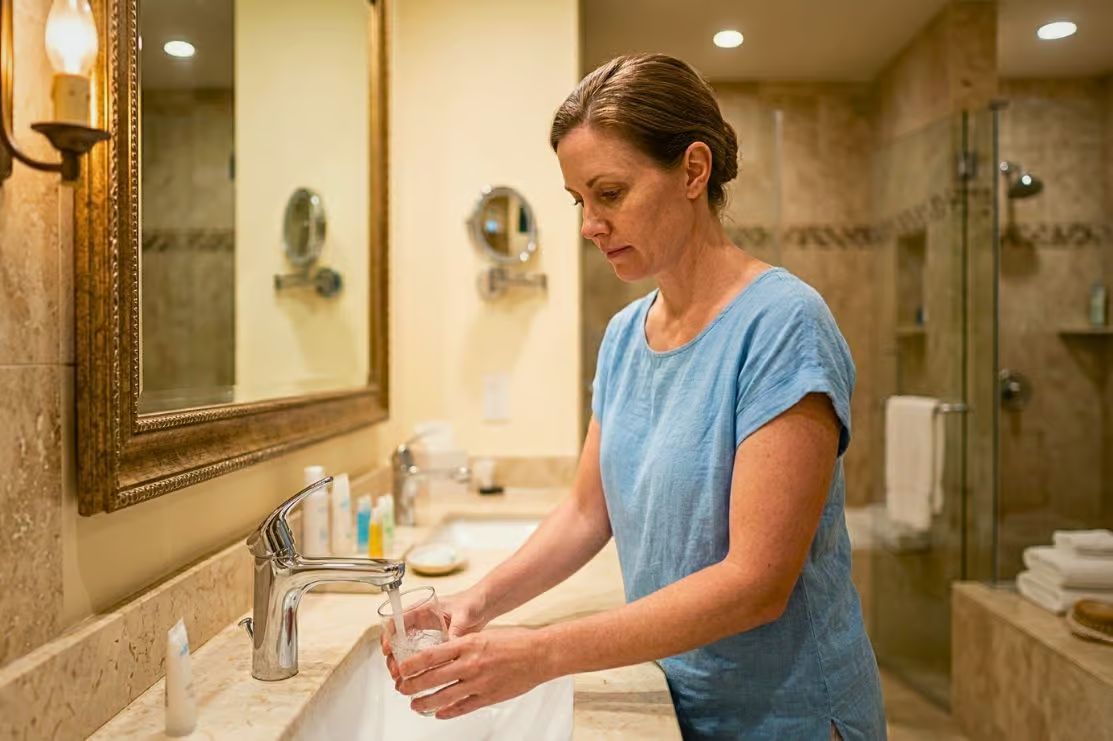
Short Answer – Can You Drink the Water in Cancun?
Confusion about tap water is one of the most common questions tourists bring to their first appointment in the Riviera Maya. The short answer is no – the tap water in Cancun is not safe to drink – but that answer comes with important nuance about ice, brushing your teeth, and the everyday risks that most visitors don’t think about until it’s too late.
Why Cancun’s Water Affects Tourists Differently
The issues with water in Cancun aren’t because of bad plumbing or a lack of care. The Yucatan Peninsula has a unique mix of geology, environment, and microbiology that’s genuinely different from what most tourists are used to back home.
The geology factor
The Yucatan sits on porous limestone, which means freshwater doesn’t come from rivers or snowmelt. Instead, it comes from an interconnected system of underground caves (cenotes), sinkholes, and aquifers. That rock type offers very little natural filtration – agricultural runoff, sewage, and surface contaminants can seep into the groundwater far more easily than in clay-soil regions or areas fed by surface rivers.
The microbial factor
Cancun’s tap water contains strains of coliform bacteria, enterotoxigenic E. coli (ETEC), and other microorganisms that are common throughout tropical Mexico. Locals who grew up in the region have built a lifetime of tolerance to these strains. Tourists from North America, Europe, and elsewhere haven’t, which is exactly why a local can drink the same water without issue while a visitor ends up with a bad stomach. This is the biological explanation behind what travelers call “Montezuma’s Revenge.” If you’re dealing with GI symptoms in Mexico, the water source is one of the first things worth ruling out.
The infrastructure factor
Cancun does treat its municipal water at the source. The problem is what happens between the treatment plant and your hotel tap. The distribution network serving the Hotel Zone is extensive and old pipes, pressure fluctuations, and extreme temperature swings all create opportunities for recontamination along the way. Even hotels that run their own filtration systems aren’t the same as delivering water that’s safe to drink straight from the tap.
The mineral factor
Even when bacterial load is low, Cancun’s water carries a mineral profile most tourists have never encountered : higher calcium carbonate content and elevated dissolved solids compared to what comes out of a tap in Chicago, London, or São Paulo. For travelers with sensitive stomachs, that difference alone can trigger mild diarrhea or cramping that gets misread as food poisoning.
What Symptoms Actually Look Like

When water-related illness hits, it doesn’t always arrive all at once. Symptoms can range from a mild stomach upset to something that genuinely derails your trip.
The most common symptoms:
- Loose stools or diarrhea – typically starting 12 to 48 hours after exposure to contaminated water
- Stomach cramps – a general, diffuse abdominal discomfort rather than pain localized to one spot
- Nausea – especially noticeable in the mornings or right after eating, which is why many people initially assume it’s food poisoning
- Bloating and excess gas – particularly common after a few days of drinking local water
- Low-grade fever – up to 38°C (100.4°F), a sign your body is mounting a mild immune response
- Fatigue – compounded quickly by dehydration, heat, and the physical toll of GI distress
What to expect in most cases
Most people who get sick from the water have a mild case. Two to four days of rest and consistent fluid intake is usually enough for the body to clear it. That said, the tropical heat and the amount of alcohol many visitors consume in Cancun make dehydration escalate faster than it would back home. What starts as a manageable stomach issue can become more serious if fluids aren’t replaced early and consistently.
How to Tell If It’s Just Discomfort or Something That Needs Attention
Not every stomach reaction to Cancun’s water requires a doctor. Here’s how to assess what you’re actually dealing with.
Usually manageable on your own:
- Loose stools fewer than 4 times per day
- Mild cramping that isn’t severely painful
- Nausea without persistent vomiting
- Low-grade fever below 38°C (100.4°F) that clears within 24 hours
- Symptoms that begin improving after 24 to 48 hours of rest and oral rehydration
Seek medical attention if you have:
- Diarrhea more than 4 to 6 times per day lasting longer than 48 hours
- Fever above 38.5°C (101.3°F) that doesn’t come down with acetaminophen (paracetamol)
- Blood or mucus in your stool, which changes the diagnosis and typically requires antibiotics
- Persistent vomiting that prevents you from keeping fluids down for more than 4 to 6 hours
- Signs of significant dehydration: dizziness when standing, dark urine, very dry mouth, or confusion
- Severe pain concentrated in one specific area of the abdomen, not general cramping
- Symptoms in a young child, an older traveler, or anyone with a weakened immune system
Get a rapid symptom assessment. Use our emergency triage tool to find the right care level in one minute.
Why that last distinction matters
Mild traveler’s diarrhea and bacterial gastroenteritis with blood in the stool are not the same condition. The second category almost always requires prescription antibiotics, not just over-the-counter remedies, and shouldn’t be managed independently for more than 24 hours.
What to Do Right Now (and Before You Arrive)
Whether you’re already in Cancun or still planning your trip, these steps reflect how to actually manage water safety in this destination.
1. Carry loperamide (Imodium). Available over the counter at any Mexican pharmacy under the brand name Imodium or as a generic. It won’t treat the underlying cause but will allow you to function during mild GI episodes. Note: loperamide should be avoided if you have fever or blood in stool — in those cases, slowing gut motility can make a bacterial infection worse.
2. Drink only bottled or purified water — every time. This includes your morning coffee if it’s made with tap water at a budget accommodation. Check whether your hotel’s water dispenser is purified or simply filtered. In the Riviera Maya, the standard is bottled water for drinking, and that standard exists for a reason.
3. Ask specifically about ice. Most hotels and resort restaurants use purified ice, but this is not universal at smaller establishments, food stalls, or street vendors. The rule “if in doubt, skip the ice” is still the safest approach outside of established tourist venues.
4. Use bottled water for brushing your teeth. This one is underestimated. The volume of tap water that enters your system while brushing is small, but it’s enough to cause problems in susceptible visitors. Keep a small bottle on the bathroom counter.
5. Rehydrate aggressively in the heat. At pharmacies including Farmacia Similares, Farmacias del Ahorro, and most convenience stores, you can buy Vida Suero Oral — Mexico’s oral rehydration solution — without a prescription. It’s far more effective than plain water for replacing electrolytes lost through sweating, and it matters more here than in a cooler climate.
Getting Medical Help in Mexico
If your symptoms escalate beyond what rest and oral rehydration can manage, you have practical options. Walking into a local clinic or hospital can be confusing for visitors unfamiliar with Mexico’s healthcare system. Telemedicine consultations allow you to speak with a licensed physician from your hotel room, get a diagnosis, and have a prescription filled and delivered without leaving the property. We offer same-day telemedicine consultations throughout Mexico, with medication delivered within 60–90 minutes in Cancun and the Riviera Maya if treatment is needed.
For complete information on treating traveler’s diarrhea while in the area, see: Traveler’s Diarrhea Treatment in Cancun — Same-Day Care for Tourists
This article is for informational purposes and does not constitute medical advice. If you are experiencing severe symptoms, persistent fever, or signs of significant dehydration, please seek professional medical evaluation.